2026年 3月11日 ー東日本大震災から15年を迎えて
アジア学院で行った、3月11日を覚えた記念集会のレポートです。三つの災害が重なった、あの東日本大震災から15年。アジア学院では礼拝を行い、今もなお大切な人を捜し続けている方々のために祈りを捧げました。
私たちはまた、あの日アジア学院を襲ったもの ―土地、心、そして身体に降り注いだ放射性降下物の記憶を呼び起こしました。非電化工房の藤村 靖之先生、そしてアジア学院の荒川 治校長、荒川 朋子前校長と共に、この15年間、私たちがどのように土地を守り、次世代の健康を守るために歩んできたかを深く見つめ直しました。
そして最終的に、私たちはこの歩みを止めることなく、平和と、核の汚染のない世界のために働き、祈り続けることを誓い合いました。
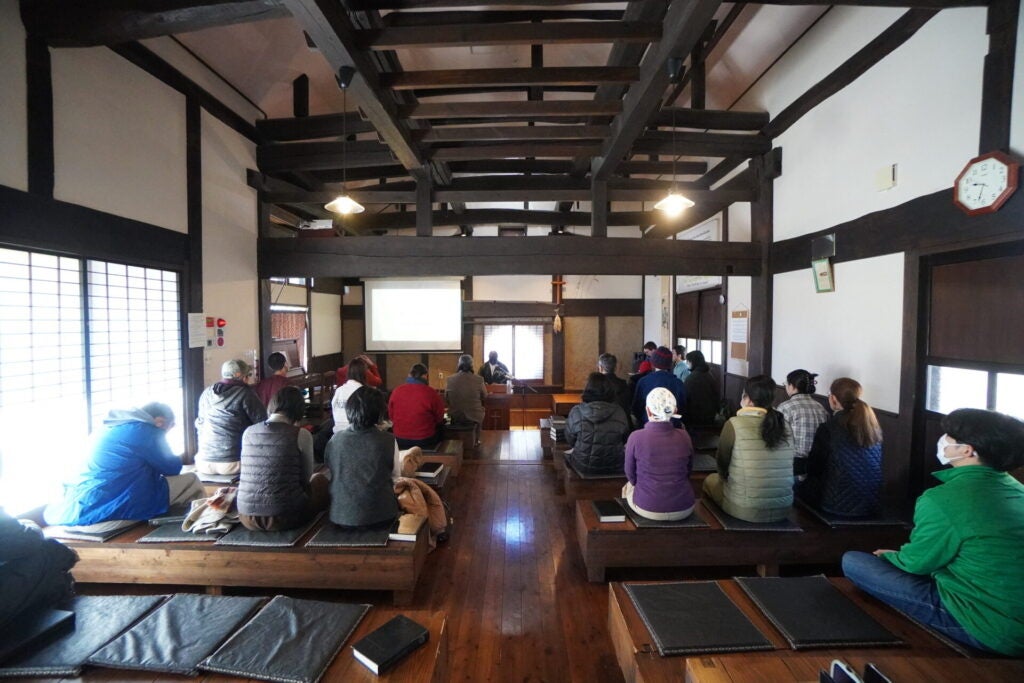
以下は、当日語られた荒川 治校長のメッセージです。
東日本大震災から15年を迎えて
あの日から、15年が経ちました。2011年3月11日。地震と津波、そして原発事故。
私たちは、想像を超える出来事の中に投げ込まれました。多くのいのちが奪われました。
大切な人を失った人々の深い悲しみは、今も続いています。
自然は時に猛威を振るい、人のいのちを奪います。しかし同時に、食べ物を与え、人を生かしてくれるのも自然です。私たちは自然の外にいる存在ではなく、自然の一部として生きています。自然の中には、生きている不思議と、死んでゆく不思議が共にあります。
その神秘の中で、私たちは生かされているのです。
歌手の加藤登紀子さんは、夫を亡くした後、悲しみについてこう語っています。「悲しみはなくしたいものではなく、むしろとても大切なものになった。悲しみがあるからこそ、人の痛みや世界の苦しみがわかるようになる。悲しみは人生の中で守るべき感情であり、悲しみを通して、人や世界と深くつながれる。」
加藤さんは、悲しみを「乗り越える」というよりも、悲しみを自分の中に大切に持ちながら生きるという感覚になったと言います。悲しみは、愛の裏側にある。愛しているからこそ、悲しみがあるのです。
また、随筆家で詩人の若松英輔さんは、著書、『悲しみの秘義』の中でこう語っています。「人生には、悲しみを通してしか開かない扉がある。」
この世には、悲しみを通してしか見えてこないものがあります。深い悲しみの中で生きる人は、胸の中に見えない涙を流しています。しかしその悲しみは、新しい生や希望の始まりに触れている可能性がある。悲しみを通してしか開かない扉があるのです。
私たちのアジア学院も、この震災で被災しました。幸い、命を落とした人はいませんでした。しかし、建物が壊れる以上の大きな試練がありました。それは、目に見えないものと向き合う試練でした。
原発事故によって放出された放射能。それは目に見えません。見えないものは、人の心に不安と疑いを生み出します。放射能に対する「過剰反応」と「鈍
感反応」。恐れすぎる人と、まったく気にしない人。「いのちを守る行動」と「経済を守る行動」。どちらが正しいのかという対立。「風評被害」と「健康被害」という言葉の間で、社会は揺れました。何を信じればよいのか分からない。それ自体が大きな苦しみでした。
しかし、私たちは立ち止まりませんでした。最初に取り組んだのは、見えない放射能を見えるようにすることでした。
測定器をそろえ、市民自らが放射能を測りました。通学路を測り、食べ物を測り、子どもたちの環境を測りました。恐れることをやめたのではありません。
正しく恐れるために、事実を知ろうとしたのです。見えるようになったとき、私たちはようやく冷静に判断できるようになりました。さらに私たちは、国の基準を待つだけでなく、自分たちで安全基準を定め、その基準の中で生活することを選びました。それは、不安に振り回されるのではなく、主体的に生きるという決断でした。
災害を克服するとは、単に元の状態に戻ることではありません。自分たちの生き方を、もう一度選び直すことなのだと思います。震災は、私たちに大きな気づきを与えました。
それは、土と水と空気がどれほど尊いものであるかということです。
それまでも大切だと知っていたはずです。しかし放射能汚染を経験して、私たちはそれらが失われうるものだと知りました。当たり前と思っていた自然の循環が、実はかけがえのない恵みであることを、心の底から実感したのです。
人間が築いた文明は、自然の前ではとても脆いものです。高く積み上げた塔も、一瞬で崩れ去ります。
しかし同時に、私たちは知りました。人間もまた自然の一部であるということを。放射能があっても、文句も言わずに咲く花。静かに生きる動物たち。
命は黙って与えられ、死んでもなお他の命を支えます。その自然の摂理に触れたとき、私たちは絶望の中で、希望を見いだしました。
しかし15年経った今も、現実は続いています。アジア学院の森には、黒い袋に入った放射性廃棄物が保管されています。セシウムの半減期は約30年。森の恵みしいたけを以前のように食べることができません。この現実は、原発事故の愚かさを忘れさせません。
人間は忘れやすい生き物です。原発は温室効果ガス削減という理由で再稼働が進められています。しかし私たちは問い続けなければなりません。自然を壊さずに、食べていくことはできないのか。経済と環境の対立を超える道はないのか。
私たちが見いだした希望は、自分の食べ物を自分でつくり、森とともに生きる里山の暮らしにあります。自然を搾取するのではなく、循環の中で生きる。土を耕し、水を守り、空気を汚さない。そのような生き方こそが、真の平和につながるのではないでしょうか。
震災のあと、私たちは以前よりも強い希望と信仰をもって歩むよう招かれていると感じています。いのちの根源につながること。自然と大地、そしてその奥にあるいのちの源と結ばれて生きること。それを、私たちはこれからも体現していきたいと思います。
15年という時間は、決して短くありません。しかし放射性物質の半減期を思えば、まだ道半ばです。だからこそ今日、「災害を克服する」とは何かを、あらためて問い直したいのです。それは単に傷を癒すことではありません。自然とともに生きるという原点に立ち返ること。見えないものを見ようとし、正しく恐れ、そして希望を選び続けること。その歩みの中にこそ、本当の意味での復興があると、私は信じています。
祈り
どうか、この世界に失われたいのちと悲しみを抱えたすべての人々に、安らぎと癒しを与えてください。
私たちが自然の中で生かされていることを忘れず、土と水と空気の恵みを大切に守る力を与えてください。
悲しみを通して希望を見出すことができるように、愛とつながりの中で生きる勇気を私たちに与えてください。
そして、私たちの歩みが、未来の世代に希望と平和を残すものとなりますように。
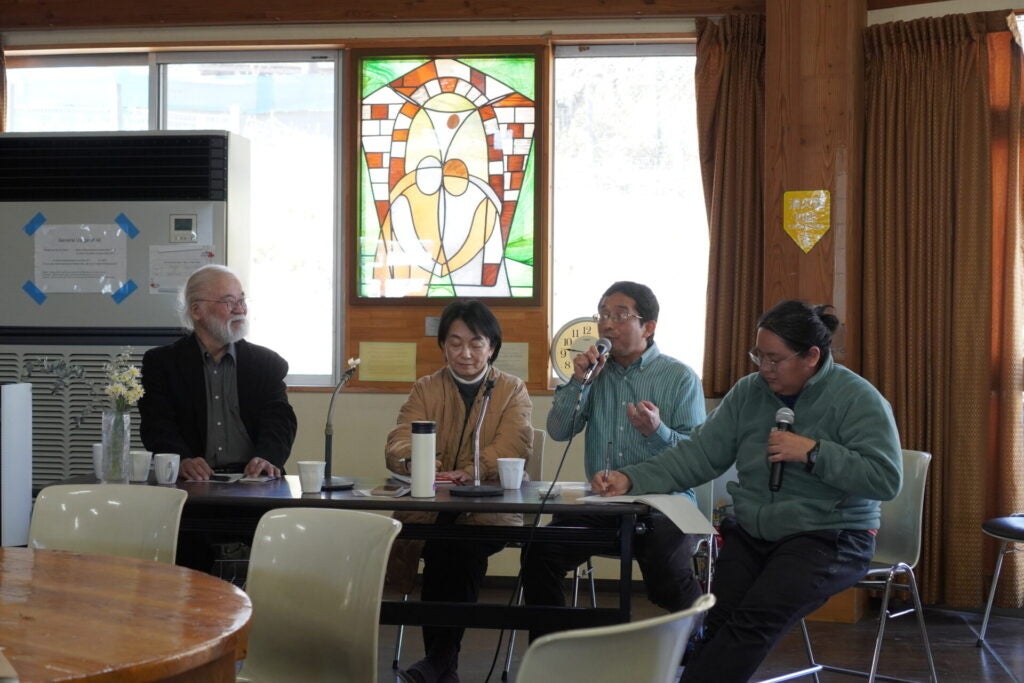
3.11. 2026 -Marking 15 Years Since the Great East Japan Earthquake
It has been fifteen years since the Triple Disaster of 2011. Today we gathered at ARI for worship and prayed for those still suffering as they search for loved ones.
We also remembered what the disaster did to our ARI; to the land, our minds and our bodies as radioactive fallout poured down all around us. We also were led by Dr. Yasuyuki Fujimura of the Non-Electric Atelier, Director Osamu Arakawa and Former Director Tomoko Arakawa of ARI to think about how we have also worked through these past fifteen years to protect the land and to protect the health of the next generation.
Finally, we were called to not stop this work but to continue to work and pray for peace and a world free of nuclear pollution.
The following is the message delivered by our Director, Osamu Arakawa on that day.
Marking 15 Years Since the Great East Japan Earthquake
It has been 15 years since that day—March 11, 2011. The earthquake, the tsunami, and the nuclear accident.
We were thrown into events beyond our imagination, and many lives were lost.
The deep grief of those who lost loved ones continues even now.
Nature sometimes unleashes tremendous power and takes lives. Yet at the same time, it provides food and sustains life. We are not beings outside of nature; we are part of it. Within nature, there is the mystery of life and the mystery of death.
It is within this mystery that we are given life.
Our ARI was also affected by this disaster. Fortunately, no lives were lost. But the challenges we faced went beyond damaged buildings.
We faced the invisible: radiation released by the nuclear accident. Invisible things create fear and uncertainty in people’s hearts. There were “overreactions” and “underreactions,” people who feared too much and those who did not care at all, actions to protect life and actions to protect the economy. Which was correct? Society wavered between “reputational damage” and “health damage.” Not knowing what to believe was itself a heavy burden.
Yet we did not stop. The first thing we did was make the invisible—radiation—visible.
We acquired detectors and measured radiation ourselves: along school routes, in food, in children’s environments. We did not stop fearing; we sought knowledge to fear correctly. When it became visible, we could finally make calm, informed decisions. Furthermore, we chose not to wait for government standards but to set our own safety thresholds and live within them. This was a decision to live proactively, not be ruled by fear.
Overcoming a disaster does not mean simply returning to the way things were. It means choosing once again how we will live. The disaster taught us many lessons.
Most importantly, we realized the preciousness of soil, water, and air.
We had known their value, but radiation contamination taught us how fragile they can be. We came to truly understand that the natural cycles we take for granted are a priceless blessing.
Human civilization is fragile in the face of nature.
Even towers built high can crumble in an instant. Yet we also learned that humans are part of nature. Flowers bloom despite radiation; animals live quietly. Life is given silently, and even in death, it supports other lives. It is in this natural order that we find hope, even in despair.
Even now, 15 years later, reality continues. In the forests of ARI, radioactive waste is stored. Cesium has a half-life of about 30 years. We cannot eat the forest’s bounty, such as shiitake mushrooms, as freely as before. This reality reminds us of the foolishness of nuclear power.
Humans are forgetful. Yet nuclear plants are restarting in the name of reducing greenhouse gas emissions. We must continue to ask: Can we live without destroying nature? Is there a way to go beyond the conflict between economy and environment?
The hope we have found is living in harmony with the satoyama, the countryside. Growing our own food, living with the forest. Not exploiting nature, but living within its cycles. Tilling the soil, protecting water, keeping the air clean. This way of life is the path to true peace.
After the disaster, we feel called to walk with stronger hope and faith than before. To connect with the source of life. To live in connection with nature, the earth, and the life-giving force beyond. This is what we want to embody going forward.
Fifteen years is not a short time, yet, considering the half-life of radioactive substances, we are still midway. Today, we must reconsider what it means to overcome a disaster. It is not simply to heal wounds. It is to return to the origin of living with nature, to see the unseen, to fear correctly, and to choose hope continually. In this journey lies the true meaning of reconstruction.
A Prayer
May peace and healing be given to all who carry grief and have lost lives in this world.
May we never forget that we are sustained by nature, and be granted the strength to protect the blessings of soil, water, and air.
May we find hope through grief, and the courage to live in love and connection.
May our actions leave hope and peace for generations to come.
このプレスリリースには、メディア関係者向けの情報があります
メディアユーザー登録を行うと、企業担当者の連絡先や、イベント・記者会見の情報など様々な特記情報を閲覧できます。※内容はプレスリリースにより異なります。
すべての画像
- 種類
- イベント
- ビジネスカテゴリ
- 環境・エコ・リサイクル学校・大学
- ダウンロード
- プレスリリース素材
このプレスリリース内で使われている画像ファイルがダウンロードできます