内閣府が公募した「海洋無人機(海洋ドローン)の利用実証事業(基本計画策定)」に採択 <English follows>
~洋上風力発電施設の維持管理における海洋ドローンの社会実装に向けた基本計画を策定~
東洋エンジニアリング株式会社(代表取締役 取締役社長 CEO: 細井 栄治、以下TOYO)は共同事業者(株式会社IHI、伊藤忠商事株式会社、沖電気工業株式会社、日鉄エンジニアリング株式会社、株式会社FullDepth)と共に、内閣府総合海洋政策推進事務局が公募した「海洋無人機(海洋ドローン)の利用実証事業(基本計画策定)」に、「海洋ドローンを活用した洋上風力発電施設維持管理の社会実装モデル及び基本計画の策定」を提案し、採択されました。
事業概要
海洋無人機(海洋ドローン)は、省人化や生産性向上、海洋の可視化に不可欠な技術として期待されています。本事業では、2025年度事業の成果*¹を基盤として、洋上風力発電施設の維持管理を対象に、2030年頃における海洋ドローン*²の活用形態を想定した社会実装モデル(初案)を構築します。あわせて、その実現に向けた利用実証の基本計画を策定するとともに、2040年に向けた技術開発や制度整備の方向性を示すロードマップを取りまとめます。
TOYOは、これまで多様な領域で培ってきたプロジェクト遂行の知見と実績を活かし、本事業の代表実施者として、事業全体の統括ならびに社会実装モデルの具体化を主導します。
① 社会実装モデル(初案)の構築
2030年頃の洋上風力発電施設の維持管理における海洋ドローンの活用形態を、「社会実装モデル(初案)」として取りまとめます。発電事業者のニーズや海域・設備条件を踏まえ、海洋ドローンや周辺技術を活用した点検方法、システム構成、運用体制、データ利活用のあり方、導入効果および事業性等を整理し、複数海域へ展開可能な社会実装モデルを検討します。
② 利用実証の基本計画の策定
社会実装モデルの実現に向けて、現状では不足している機能・性能の開発や、各種システムの統合検証が必要となります。このため、2027年度から2030年度にかけて利用実証を行うことを想定し、その基本計画を策定します。本基本計画では、候補サイトの選定、実証内容、実施体制、工程、概算費用、評価方法等を整理するとともに、段階的な技術開発および実証の進め方についても検討します。
③ 2040年に向けたロードマップの策定
2030年時点においても、海洋ドローンの活用形態は発展途上段階にあることが想定されます。そこで、2030年以降も継続して取り組むべき技術開発、事業モデルの高度化、制度・認証・運用ルール等の環境整備の方向性を整理し、2040年に向けたロードマップとして取りまとめます。
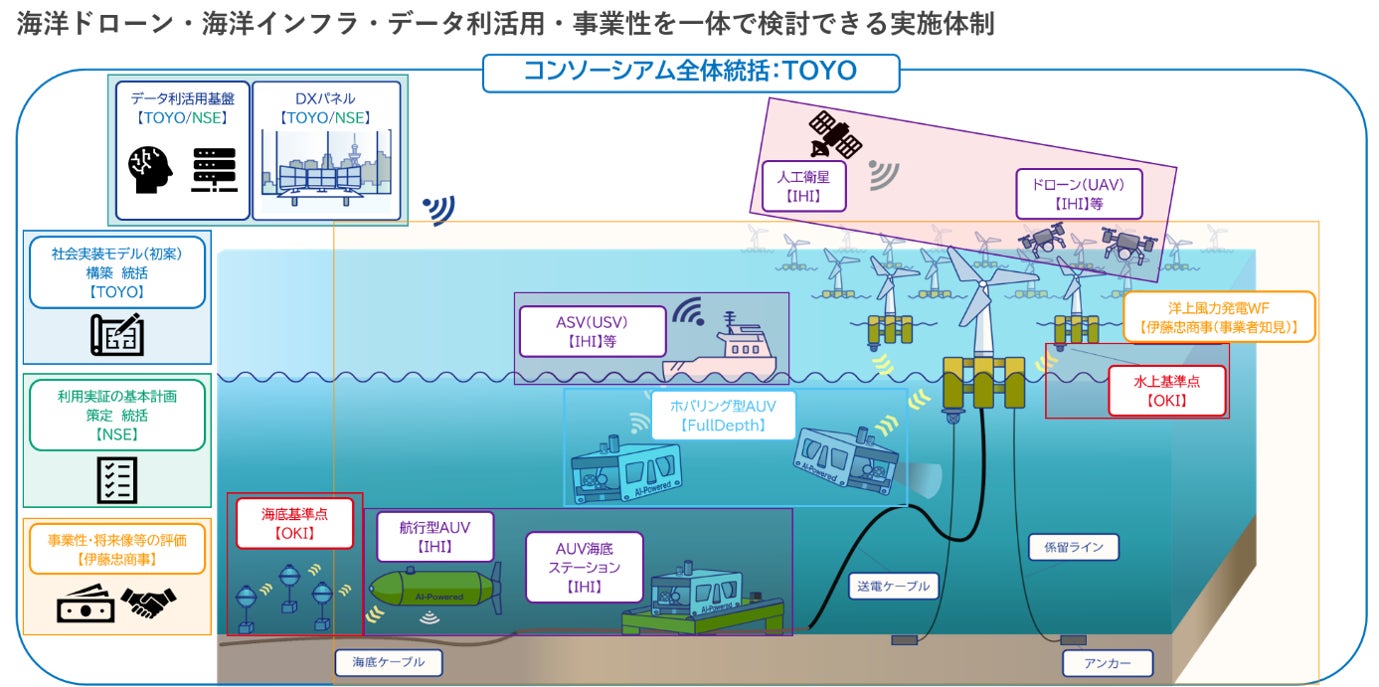
TOYOは、本事業を通じて共同事業者とともに海洋ドローンの社会実装を推進し、再生可能エネルギーや海洋資源開発をはじめとする幅広い海洋分野へ展開することで、持続可能な社会の実現と海洋分野における社会課題の解決に貢献します。
*¹ 2025年度に内閣府総合海洋政策推進事務局が公募した「自律型無人探査機(AUV)利用実証事業」において、TOYO、NSE、FullDepth、OKIの4社は共同でAUV等を活用した洋上風力発電設備の水中点検作業を無人化するシステムの社会実装に向けたロードマップを提案しました。
*² 本リリースにおける「海洋ドローン」は、ASV、ROV、AUV等の海洋無人機の総称として使用しています。
ASV(Autonomous Surface Vehicle):自律制御により水上を航行する無人機。
ROV(Remotely Operated Vehicle):遠隔操作により水中を潜行する無人潜水機。
AUV(Autonomous Underwater Vehicle):搭載機器により水中で自らの位置や周囲の状況を認識し、自律的に航行する無人潜水機。
===関連する情報はこちらから===
内閣府 海洋無人機(海洋ドローン)利用実証事業について:https://www8.cao.go.jp/ocean/policies/auv/auv_pilot_project/pilot_index.html
2025年度事業の成果に関するニュースリリース(2026年3月30日)
https://www.toyo-eng.com/jp/ja/company/news/?n=5966
TOYOについて
東洋エンジニアリング(TOYO)は1961年創立で、グローバルネットワークを構築し、世界60ヶ国以上のお客様にエンジニアリングサービスの提供とプラント建設を行ってきた総合エンジニアリング会社です。祖業のアンモニア・尿素という化学肥料分野を中心に独自技術を磨き、石油化学、石油・ガス処理、資源開発、発電など、多岐にわたる領域へと事業分野を拡大してきました。また、「エンジニアリングで地球と社会のサステナビリティに貢献する」というミッションを掲げて、持続可能な社会の実現を目指し、環境に配慮したソリューションや最新技術を導入し、脱炭素社会の実現に取り組んでいます。https://www.toyo-eng.com/jp/ja/
<English follows>
Selected for Japan Cabinet Office’s “Marine Unmanned Vehicle (Marine Drone) Demonstration Project”
- Developing a Basic Plan for the Practical Deployment of Marine Drones for the Maintenance and Inspection of Offshore Wind Facilities –
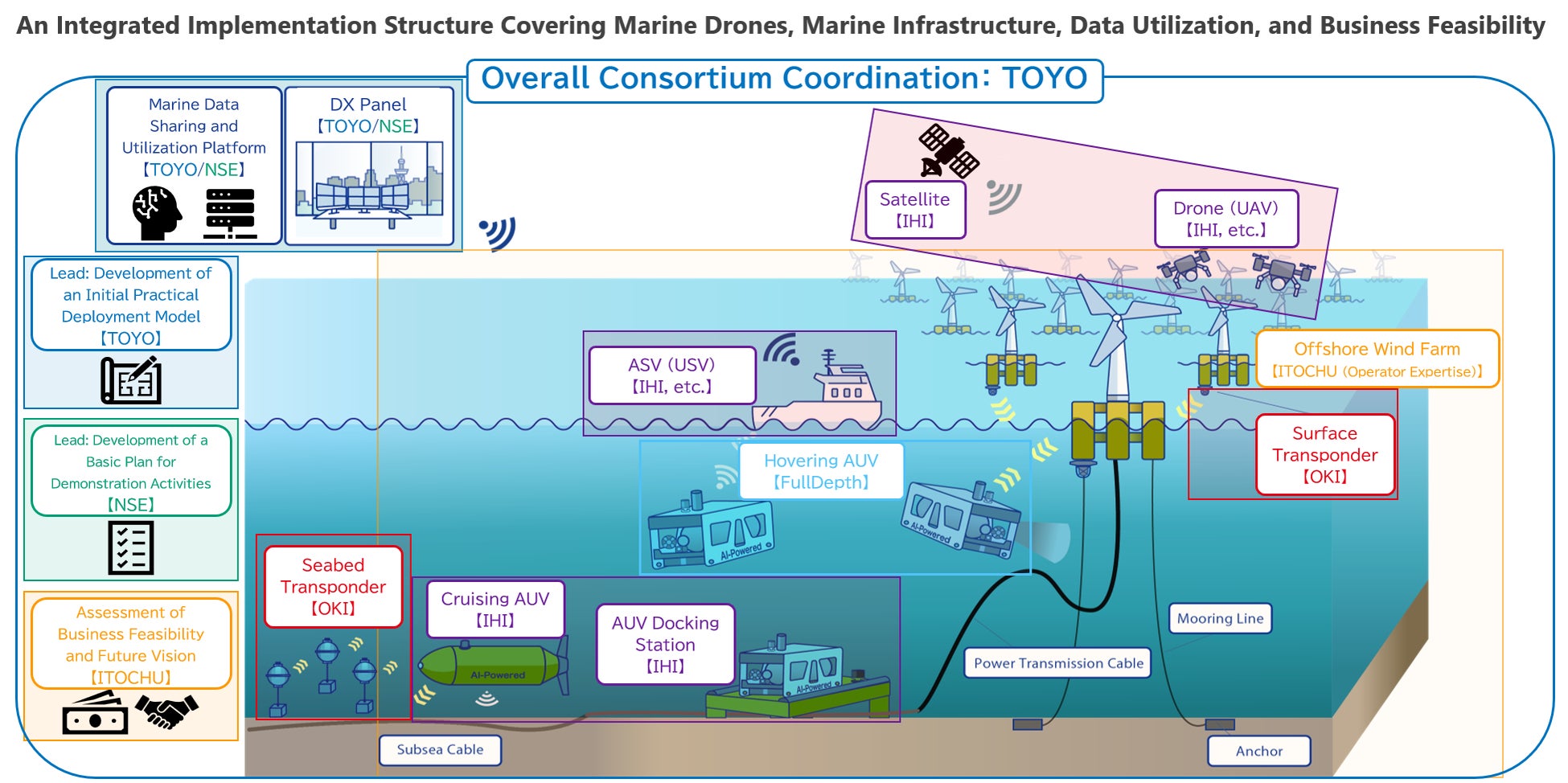
Toyo Engineering Corporation (President and CEO: Eiji Hosoi, “TOYO”), in collaboration with IHI Corporation, ITOCHU Corporation, Oki Electric Industry Co., Ltd. (“OKI”), Nippon Steel Engineering Co., Ltd. (“NSE”), and FullDepth Co., Ltd. (“FullDepth”), has been selected for the “Marine Unmanned Vehicle (Marine Drone) Demonstration Project (Basic Plan Development),” publicly solicited by the Cabinet Office National Ocean Policy Secretariat, with its proposal to develop a practical deployment model and basic plan for the maintenance and inspection of offshore wind facilities using marine drones.
Under the project, TOYO and the other participating companies will develop a practical deployment model for marine drones used in the maintenance and inspection of offshore wind facilities, as well as a basic plan for demonstration activities aimed at realizing the model.
Project Overview
Marine unmanned vehicles (marine drones) are expected to play an increasingly important role in reducing manpower requirements, improving operational efficiency, and enhancing capabilities for marine observation.
Building on the outcomes of the FY2025 project*¹, the project team will examine a future vision for the maintenance and inspection of offshore wind facilities using marine drones around 2030 and develop an initial practical deployment model. The team will also develop a basic plan for demonstration activities toward practical deployment, together with a roadmap outlining the direction of continued technical development and the establishment of relevant institutional, certification, and operational frameworks toward 2040.
As the lead implementing organization, TOYO will oversee the overall project and lead the development of the practical deployment model, leveraging its extensive knowledge and experience accumulated through project execution across a wide range of fields.
1) Development of an Initial Practical Deployment Model
The project team will develop an “initial practical deployment model” envisioning the use of marine drones for the maintenance and inspection of offshore wind facilities around 2030.
Based on the needs of offshore wind power operators as well as site and facility conditions, the team will examine inspection methods using marine drones and related technologies, system configurations, operational frameworks, data utilization, expected benefits, and business feasibility. Through these studies, the team aims to establish a practical deployment model that can be applied across multiple offshore areas.
2) Development of a Basic Plan for Demonstration Activities
To realize the practical deployment model, further technical development will be required, together with integrated verification of the various technologies and systems involved.
The project team will therefore develop a basic plan for demonstration activities envisioned for FY2027 through FY2030. The plan will cover candidate demonstration sites, the scope of demonstration activities, implementation structure, schedule, estimated costs, and evaluation methods. The team will also examine a phased approach to technical development, verification activities, and field demonstrations.
3) Development of a Roadmap toward 2040
Marine drones and related marine robotics are expected to continue evolving beyond 2030.
The project team will therefore examine the direction of continued technical development, enhancement of business models, and the establishment of relevant institutional, certification, and operational frameworks required for further deployment. These considerations will be organized into a roadmap toward 2040.
Looking Ahead
Through this project, TOYO will work together with the project partners to accelerate the practical deployment of marine drones and related marine robotics.
In addition to their application to the maintenance and inspection of offshore wind facilities, TOYO aims to expand the utilization of marine drones to a broad range of marine fields, including renewable energy and marine resource development, thereby contributing to the realization of a sustainable society and addressing social challenges in the marine sector.
*¹ In the FY2025 “Autonomous Underwater Vehicle (AUV) Demonstration Project,” publicly solicited by the Cabinet Office National Ocean Policy Secretariat, TOYO, NSE, FullDepth, and OKI developed and proposed a roadmap for the practical deployment of a system for unmanned underwater inspection of offshore wind facilities using AUVs and related marine robotics.
*² In this release, “marine drones” is used as a collective term for marine unmanned vehicles, including ASVs, ROVs, and AUVs.
ASV (Autonomous Surface Vehicle): An unmanned surface vehicle capable of autonomous navigation.
ROV (Remotely Operated Vehicle): An unmanned underwater vehicle operated remotely.
AUV (Autonomous Underwater Vehicle): An unmanned underwater vehicle capable of autonomous navigation.
===Please refer to the link below===
■ “Marine Unmanned Vehicle (Marine Drone) Demonstration Project (Basic Plan Development),” publicly solicited by the Cabinet Office National Ocean Policy Secretariat
Website https://www8.cao.go.jp/ocean/policies/auv/auv_pilot_project/pilot_index.html (Japanese only)
■ March 30, 2026 Press Release:
このプレスリリースには、メディア関係者向けの情報があります
メディアユーザー登録を行うと、企業担当者の連絡先や、イベント・記者会見の情報など様々な特記情報を閲覧できます。※内容はプレスリリースにより異なります。
すべての画像
- 種類
- 経営情報
- ビジネスカテゴリ
- 建設・土木電気・ガス・資源・エネルギー
- キーワード
- 海洋
- ダウンロード
- プレスリリース素材
このプレスリリース内で使われている画像ファイルがダウンロードできます
