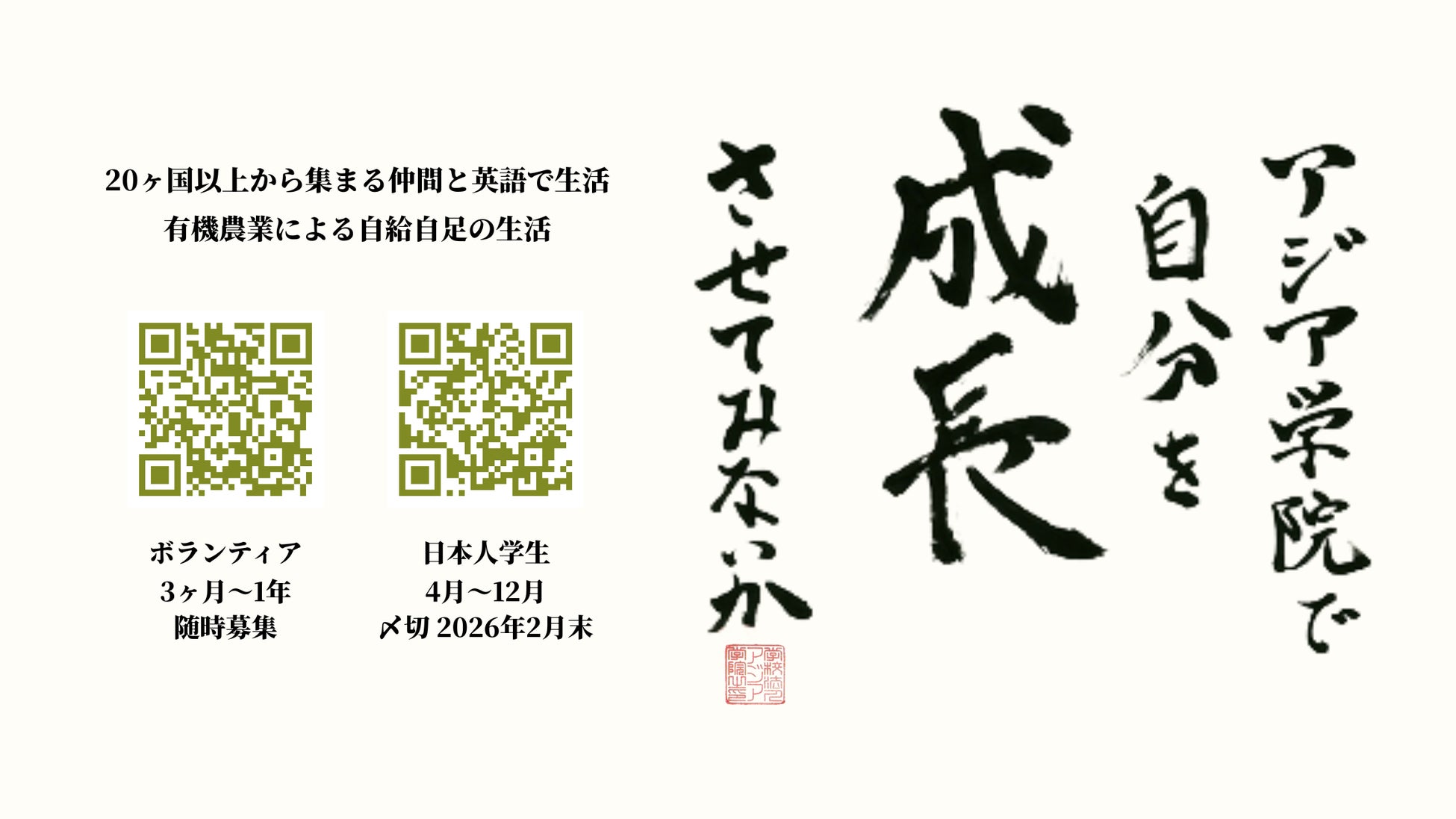
アジア学院で自分を成長させてみないか ― 来たれ、2026年度 日本人学生!
日本人学生募集について見学も随時受け付けております。ぜひお気軽にご連絡ください。なお、アジア学院では来年度の長期ボランティアも同時募集しております。
皆さんは、日本人でもアジア学院の学生になれるということをご存知でしたか?
アジア学院の学生というと、外国からというイメージが強いのですが、実は日本人学生も募集しています。アジア学院で学べることや、学費、必要な英語力、卒業生の進路など、よくある質問をわかりやすくまとめましたので、ぜひお読みください。
Q1、アジア学院で何を学ぶことができるの?
農村コミュニティリーダー、つまり、地域に根差し、その土地の資源や環境に十分配慮しながら、人々の生活改善や地域の課題解決のために奉仕するリーダーに必要な要素を学べます。
― 具体的なカリキュラムについて
アジア学院のカリキュラムは、「サーバントリーダーシップ」、「フードライフ」、「学びのコミュニティ」という3つの柱によって構成されています。
1, サーバントリーダーシップ
傾聴や非暴力コミュニケーションなどの概念を学び、そのような技術を、交代でグループリーダーを行い実践することで、リーダーが一人で決断を下すトップダウン型ではなく、人々に仕える奉仕型リーダーを目指します。
2, フードライフ
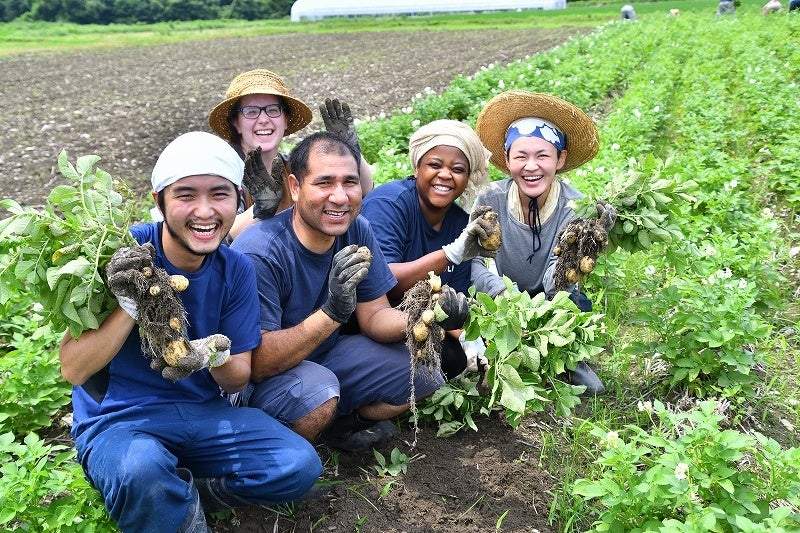
「Foodlife」とは、「食べ物といのちは切っても切り離せない」という意味のアジア学院の造語です。開発途上国において、農業は未だに生計を立てる主要な手段です。機械や大規模な農地がなくても実践でき、なおかつ、人と環境に優しい「有機農業」の技術を学び、コミュニティを手助けする術を身に着けます。昨年、米不足が問題となった日本においても、自分の食べるものに責任を持ち、生産する術を学ぶことは、ますます重要視されていくのではないでしょうか。
3, 学びのコミュニティ
アジア学院で求められるのは、自分自身を見つめ直し、自己変革をするための柔軟な頭と心です。日々経験する、自分の価値観を覆されるような出来事をも、自分を成長させる機会ととらえ、そこから学ぶことが求められます。経験するのは相違だけではありません。アジア学院は、それぞれの背景は違っても、同じような価値観を持つ人々とつながりを持ち、互いに学び合える場でもあります。
卒業生の声:
「アジア学院は有機農業やリーダーシップについて学べるというだけでなく、第一に、人が一人の人間として成長できる場所だと思います。プログラムでは多種多様な人々とだけでなく、自分自身とも向き合わなければならない機会がたくさんあります。他者と、そして自分との対話を通して、どんな価値を持ってこの先の人生を歩みたいか、という土台を私はアジア学院で得ることができました。異なる目的や使命を持って集まったコミュニティの中で、価値観を共有し、切磋琢磨し合いたいという方にはぜひ入学をお勧めしたいです。」(2017年卒 蓮見千明)
Q2、学生とボランティアとの違いは?
学生は、海外の学生と同等の立場であり、農村指導者研修プログラムに全面的に参加し、授業や実習を受けます。ルームシェアをするなどして、海外の学生たちと最も濃密に関わることができます。一方、ボランティアは、共同体生活や研修を支えるために農場やキッチン、事務所など各セクションで働きます。
卒業生の声:
「日本人学生、卒業生インターン、職員を経験した身として、他の学生たちと1番濃密に議論や対話をすることができたのは日本人学生の時だったと思います。良い意味で繕っていない本音を曝け出した学生たちと日々、様々なトピックを分かち合い、考えることができたのはとても良い思い出です。1つの物事をそれぞれの文化や背景を持つ学生たちと共有し合うことで、視点や意見の多様性を再認識しました。」(2019年卒 眞木凌)
Q3、学費はどのくらいかかるの?
9か月の研修にかかる費用は授業料70万円、実験実習費26万円です(別途 寮費、食費 各3万円/月)。
研究科の卒業生インターンになることを選択すると、さらにもう一年、生活費のみで学びを続けることができます。
Q4、英語に自信がないけど大丈夫?
英語力は選考基準ではありません。ただし、アジア学院の研修はすべて英語で行われますので、研修前に英語の勉強をすることをお勧めします。英語力のスキルや流暢さよりも、まずコミュニケーションをとる姿勢が大切です。
卒業生の声:
「私は入学前から英語が不安で、入学して2ヶ月後、自分の伝えたい事が言葉にできないことが一番辛かったけど、クラスメイトに励ましてもらい、楽しく過ごす事ができました。学生には英語が母国語の人がおらず、英語のレベルや話し方もそれぞれなので、英語が得意な人も、苦手な人も相手に合わせようとお互い努力します。(2009年卒 小山萌愛)
Q5、卒業後の進路は?
日本人卒業生は、JICA海外協力隊など国際協力の分野に進む者や、国内で農家になる者、さらには、地域おこし、教育、福祉、一般企業など幅広い分野で活躍しています。
卒業生の声:
「アジア学院での学びは多岐に渡り、農業指導や農村開発に限られません。私の個人的な経験からですが、福祉、教育分野の人にとってもアジア学院での学びは充分に活かされるものだと思います。(2008年卒 中村真紀子 特別支援教育支援員)」
「一緒に学んだ学生や職員の方々、ボランティアの方々との対話や議論。対話や議論を通して、国際理解や異文化理解、平和構築、サーバントリーダー、そして自己理解を深く考えることができた。そうした環境の中で今現在のキャリアとつながっている。(2020年卒 木村勇太 JICA職員)」
📅 願書受付締切:2月28日(土)
日本人学生募集についての詳細はこちら:https://ari.ac.jp/jp-admission/
※見学も随時受け付けております。ぜひお気軽にご連絡ください。
なお、アジア学院では来年度の長期ボランティアも同時募集しております。
こちらもどうぞご覧ください。https://ari.ac.jp/volunteer/
Ready to Grow at ARI? Calling Japanese Participants for the 2026 Academic Year!
Did you know that Japanese can also enroll in ARI? Many people might imagine that our participants coming from overseas. However, we actually welcome Japanese participants as well!
To help you learn more, we’ve put together a clear and simple FAQ covering what you can study at ARI, tuition fees, required English proficiency, and the career paths of graduates. Please take a look!
For details regarding international participant recruitment, please see the following page: Admissions - Asian Rural Institute
Q1. What can I learn at ARI?
You will gain the essential skills to become a Rural Leader. This means becoming a leader who is rooted in the local community, respects local resources and the environment, and serves to improve people's lives and solve regional issues.The Curriculum: Three Core Pillars
ARI curriculum is built on three pillars: Servant Leadership, Foodlife, and Learning Community.
Servant Leadership: You will learn concepts such as active listening and non-violent communication. By taking turns as group leaders, you will practice a "service-oriented" leadership style—serving the people rather than a traditional top-down approach.
Foodlife: "Foodlife" is a term coined by ARI to express that "Food and Life are inseparable." You will learn organic farming techniques that are friendly to both people and the environment—methods that can be practiced without expensive machinery. In a time where food security is becoming a global concern, learning to take responsibility for what we eat is more important than ever.
Learning Community: ARI requires a flexible heart and mind ready for self-reflection and change. We view daily challenges—even those that overturn our values—as opportunities for growth. It is a place to connect and learn with people who share similar values, despite having different backgrounds.
Voice of a Graduate: "ARI is not just about organic farming and leadership; it is first and foremost a place where you grow as a human being. Through dialogue with others and yourself, I gained a foundation for how I want to live my life. I highly recommend ARI to anyone who wants to share values and grow together in a diverse community." (Chigira Hasumi, 2017 Graduate)
Q2. What is the difference between a Participant and a Volunteer?
Participants join the Rural Leaders Training Program on equal footing with international participants. You will attend all lectures and practical training and share a room with international participants for the most intensive experience. Volunteers work in various sections—such as the farm, kitchen, or office—to support the community life and the training program.
Voice of a Graduate: "Having experienced being a participant, an graduate intern, and a staff member, I felt the most intense discussions and dialogues happened when I was a participant. Sharing diverse perspectives with people from different cultures remains a wonderful memory." (Ryo Maki, 2019 Graduate)
Q3. How much is the tuition?
For the 9-month training:
Tuition: 700,000 JPY Lab/Practical Fee: 260,000 JPY (Additional dormitory and food fees are 30,000 JPY per month each.) Note: If you choose to become a Graduate Intern, you can continue your studies for another year with only living expenses.
Q4. I’m not confident in my English. Is that okay?
English proficiency is not a criterion for selection. However, since all training is conducted in English, we recommend studying before you join. What matters most is your attitude and willingness to communicate, rather than fluency or technical skill.
Voice of a Graduate: "I was worried about my English, and it was hard when I couldn't express myself at first. But my classmates encouraged me. Since no one is a native speaker, everyone tries their best to understand each other." (Moe Koyama, 2009 Graduate)
Q5. What are the career paths after graduation?
Our Japanese graduates are active in a wide range of fields, including international cooperation (such as JICA), local farming, community development, education, welfare, and the private sector.
Voice of a Graduate: "The learning at ARI is incredibly diverse and goes far beyond agricultural techniques or rural development. From my personal experience, I believe what you learn at ARI can be fully applied to fields like social welfare and education as well." (Makiko Nakamura, 2008 Graduate – Special Needs Education Assistant)
"The dialogues and discussions I had with fellow students, staff, and volunteers were invaluable. Through those conversations, I was able to think deeply about international and cross-cultural understanding, peacebuilding, servant leadership, and self-understanding. That unique environment is directly connected to my current career." (Yuta Kimura, 2020 Graduate – JICA Staff)
How to Apply
Application Deadline: Saturday, February 28, 2026 Details for Japanese Participants:
https://ari.ac.jp/en/jp-admission/?ari=press
We offer campus tours upon request, so please feel free to contact us.
We are also recruiting long-term volunteers for the next academic year:
このプレスリリースには、メディア関係者向けの情報があります
メディアユーザー登録を行うと、企業担当者の連絡先や、イベント・記者会見の情報など様々な特記情報を閲覧できます。※内容はプレスリリースにより異なります。
すべての画像
- 種類
- キャンペーン
- ビジネスカテゴリ
- 学校・大学環境・エコ・リサイクル
- ダウンロード
- プレスリリース素材
このプレスリリース内で使われている画像ファイルがダウンロードできます